Floor Contractors in Denver Metro: What to Check Before You Hire
The right floor contractor should provide a written scope of work, explain how the subfloor and moisture conditions will be evaluated, identify the products and installation system being used, carry appropriate insurance, and clearly state the price, schedule, warranty, and payment terms. Denver Metro homeowners should also ask how Colorado’s dry climate will affect acclimation, expansion gaps, installation, and long-term floor performance.
Choosing between floor contractors is not simply a matter of comparing prices. Two estimates can describe what appears to be the same project while including very different levels of preparation, materials, dust control, repair work, and protection for your home.
Here is what to verify before signing a flooring contract.
Start With the Condition of the Existing Floor
A responsible contractor should inspect the property before recommending refinishing, repair, installation, or replacement.
The inspection may include:
- The type and thickness of the existing flooring
- Visible gaps, cupping, crowning, scratches, stains, or loose boards
- Subfloor condition and flatness
- Signs of moisture or previous water damage
- Squeaks and movement
- Transitions between rooms
- Stair and railing conditions
- Baseboards, doors, vents, and appliances
- Access for equipment and material delivery
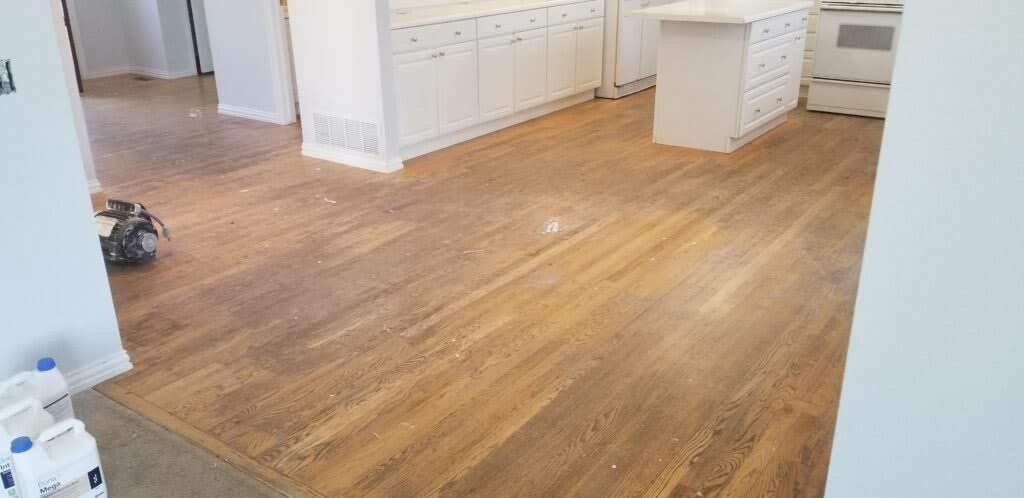
Be cautious if a contractor provides a firm price without asking about these conditions. Photos and square footage can help produce a preliminary estimate, but they may not reveal damaged subflooring, moisture problems, multiple flooring layers, difficult transitions, or boards that cannot be refinished again.
Should the Floor Be Repaired, Refinished, or Replaced?
Not every worn floor needs to be replaced. A professional inspection should help determine which option makes sense.
| Floor condition | Possible solution | Important consideration |
|---|---|---|
| Light surface scratches and dull finish | Buff and coat | The existing finish must be compatible and properly bonded |
| Deep scratches, faded color, or widespread wear | Sanding and refinishing | The wear layer must be thick enough for another sanding |
| A few damaged or stained boards | Board replacement or localized repair | New boards may require blending, staining, and refinishing |
| Loose boards or squeaks | Fastening or subfloor repair | The underlying cause must be identified first |
| Severe water damage, rot, or extensive movement | Partial or full replacement | Moisture must be corrected before new flooring is installed |
| Carpet being replaced with hardwood, LVP, or laminate | New installation | Subfloor preparation and height transitions affect the result |
A contractor should be able to explain why a particular solution is recommended. “You need a new floor” is not a complete diagnosis.
Ask for a Detailed Written Estimate
A good flooring estimate should describe exactly what is included. A one-line quote such as “refinish floors — $4,000” leaves too much room for disagreement.
The estimate should address:
- Approximate square footage
- Rooms and areas included
- Furniture and appliance moving
- Existing-floor demolition
- Carpet, tile, wood, or laminate removal
- Subfloor preparation and repairs
- Material type, brand, grade, and color
- Installation method
- Sanding and dust-containment process
- Stain and finish system
- Number of finish coats
- Baseboard or shoe-molding work
- Transitions and stair components
- Trash removal
- Delivery charges
- Project schedule
- Payment schedule
- Warranty terms
- Work specifically excluded from the price
Ask how additional work will be approved. Unexpected damage can be found after carpet or old flooring is removed, but the contractor should not perform expensive extra work without explaining the problem and receiving authorization.
Do Not Compare Estimates by Total Price Alone
A lower quote is not necessarily a better value. It may exclude work included in another proposal.
When comparing bids, place them side by side and look for differences in:
- Subfloor preparation
- Demolition and disposal
- Material quality
- Installation method
- Number and type of finish coats
- Stair or transition work
- Furniture moving
- Dust-control measures
- Warranty coverage
- Change-order policies
For example, one estimate may include floor preparation, delivery, and trash removal, while another adds those charges after the project begins.
Ask each contractor to explain the price in plain language. A professional should be able to identify the major labor and material components without becoming defensive.
Confirm Insurance, Business Identity, and Local Requirements
Ask the contractor for the legal business name and proof of current insurance. Verify that the name on the proposal, invoice, insurance documentation, and payment instructions is consistent.
Depending on the type and location of the work, local rules may apply. Colorado does not use one universal licensing system for every flooring project, so requirements may vary by city, county, project scope, and whether structural or other regulated work is involved. Homeowners should confirm applicable requirements with their local building department.
Also ask:
- Who will supervise the project?
- Will employees or subcontractors perform the work?
- Who is responsible for accidental damage?
- Who should the homeowner contact during the project?
- How are complaints or warranty issues handled?
- Will the contractor provide lien releases when appropriate?
Never rely only on a social-media profile or verbal promise. The written agreement should identify the company responsible for the work.
Ask How Colorado’s Climate Will Be Handled
Colorado’s elevation and inland geography contribute to generally low humidity and substantial temperature changes. The Colorado Climate Center describes the state’s climate as cool and dry, with generally low humidity and significant seasonal and day-to-night temperature swings.
Those conditions matter because wood responds to moisture in its environment. Flooring can gain or lose moisture and change dimension as indoor conditions change.
A contractor installing wood flooring should evaluate:
- Indoor temperature and relative humidity
- Flooring moisture content
- Subfloor moisture content
- Manufacturer acclimation requirements
- Expected seasonal conditions
- Required expansion space
- Whether the HVAC system is operating
- Whether wet construction work has been completed
Acclimation should not be reduced to “leave the boxes inside for three days.” The correct process depends on the flooring product, installation method, manufacturer instructions, site conditions, and moisture readings.
The National Wood Flooring Association publishes industry technical guidelines covering installation, moisture, sanding, finishing, and floor problems. Your contractor should also follow the flooring manufacturer’s instructions because product-specific requirements can affect performance and warranty coverage.
Questions to ask about moisture
Ask potential floor contractors:
- Will you measure both the flooring and subfloor?
- Which instrument will you use?
- Will readings be documented?
- What conditions must be reached before installation?
- What happens if the readings are outside an acceptable range?
- What indoor humidity range does the manufacturer recommend after installation?
Do not accept a guarantee that wood will never develop seasonal gaps. Some natural movement can occur. The contractor should explain what is normal, what can be reduced through proper installation and climate control, and what may indicate a larger problem.
Understand the Installation Method
The correct installation system depends on the flooring, subfloor, room, and manufacturer requirements.
Common methods include:
Nail-down or staple-down
This method is often used for wood flooring over an appropriate wood subfloor. The contractor should evaluate subfloor thickness, fastening pattern, floor direction, and movement.
Glue-down
Glue-down installation may be appropriate for certain engineered wood and other flooring products. Subfloor preparation and adhesive selection are critical. Ask whether moisture testing, moisture mitigation, or a specific trowel size is required.
Floating installation
Floating floors connect to themselves rather than being fastened directly to the subfloor. Flatness, underlayment, expansion space, transitions, cabinets, and heavy fixed objects require careful planning.
No installation method is automatically best for every house. Ask why the proposed method fits your particular flooring and site conditions.
Ask About Dust, Ventilation, and Home Protection
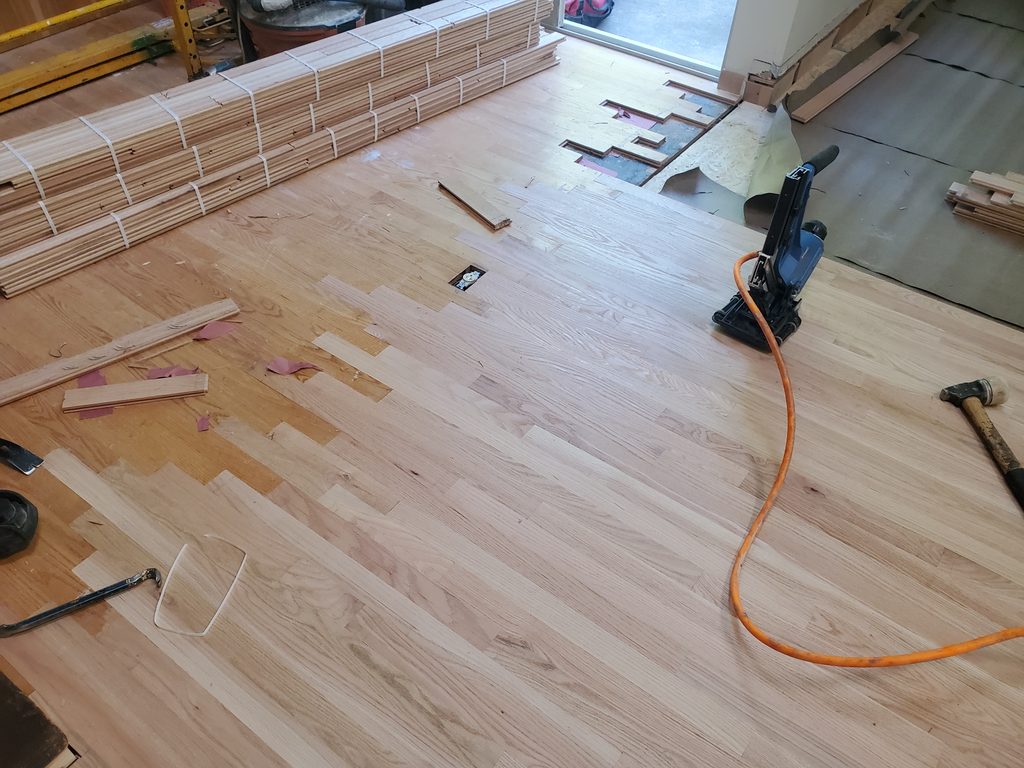
Flooring projects can create dust, noise, odors, and temporary access restrictions.
For refinishing, ask whether the contractor uses dust-containment equipment and how doorways, cabinets, vents, and adjacent rooms will be protected. “Dustless” should not be interpreted as a promise that absolutely no dust will exist.
The U.S. Environmental Protection Agency recommends isolating remodeling work areas and using exhaust ventilation to reduce the movement of dust and other pollutants. It also recommends continued ventilation after activities involving finishes or other products that may release pollutants.
Discuss:
- Whether occupants and pets can remain in the house
- Ventilation requirements
- Drying and curing times
- When socks, furniture, rugs, and pets may return
- How HVAC vents will be protected
- Where equipment and materials will be stored
- How waste will be removed
- Which products will be used
Product safety data sheets and manufacturer instructions should be available when relevant.
Establish a Realistic Timeline
The timeline depends on project size and condition, not only square footage.
A schedule may be affected by:
- Furniture and appliance moving
- Demolition
- Subfloor repairs
- Material delivery and acclimation
- Lace-in or board replacement
- Stain samples
- Drying and curing times
- Stair work
- Access limitations
- Unexpected moisture
- Weather and ventilation conditions
Ask the contractor to distinguish between working time and the time before the floor can return to normal use.
A useful written schedule might show:
- Material delivery and evaluation
- Home preparation
- Demolition or sanding
- Repairs and installation
- Staining or finishing
- Drying and curing
- Final inspection
- Furniture and rug return dates
Avoid contractors who promise an unrealistically short schedule without discussing product requirements.
Understand What Changes the Cost
Flooring prices vary because every project includes a different combination of labor, materials, preparation, and risk.
Major cost factors include:
- Square footage
- Flooring material and grade
- Existing-floor removal
- Subfloor condition
- Installation method
- Stairs
- Pattern or board direction
- Lace-in work
- Damaged-board replacement
- Stain selection
- Finish system
- Baseboards and transitions
- Furniture moving
- Trash disposal
- Restricted access
- Moisture mitigation
Dream Flooring pricing should be confirmed before publication:
- Hardwood refinishing: $3.50
- Stain upgrade: $0.70
- Buff and coat: $1.60
- Hardwood installation labor: $3.50
- Demolition, repairs, stairs, delivery, and disposal: priced according to project conditions
A useful estimate should explain what could change the price before work begins.
Review the Contract and Payment Schedule
Do not start a substantial flooring project based only on text messages.
The contract should contain:
- Contractor and customer information
- Property address
- Detailed scope
- Materials and products
- Approximate start and completion schedule
- Price and payment milestones
- Change-order procedure
- Warranty
- Customer responsibilities
- Cleanup expectations
- Cancellation terms
- Signatures
Be cautious about demands for full payment before work begins. Deposits and progress payments should be proportional to the project’s material purchases and completed work.
Keep copies of estimates, contracts, product selections, payment records, change orders, photographs, and warranty information.
Warning Signs When Hiring a Floor Contractor
Slow down if a contractor:
- Refuses to provide a written scope
- Cannot explain the installation method
- Does not evaluate moisture or subfloor conditions
- Uses only verbal promises
- Pressures you to decide immediately
- Requests payment through an unrelated person
- Offers a dramatically lower price without explaining why
- Will not identify the products being used
- Promises that sanding will produce absolutely no dust
- Guarantees wood will never move or develop seasonal gaps
- Cannot explain how additional work will be approved
- Avoids questions about insurance or warranty service
One warning sign does not prove poor workmanship, but several together justify choosing another contractor.
How Homeowners Can Prepare
Before the project begins:
- Confirm which furniture must be removed
- Empty closets included in the work area
- Secure valuables and fragile objects
- Make arrangements for children and pets
- Confirm appliance responsibilities
- Discuss alarm systems and access
- Reserve parking for work vehicles if necessary
- Confirm stain and finish selections in writing
- Ask when the HVAC system should operate
- Review the payment schedule
- Photograph existing walls, trim, doors, and adjacent surfaces
Preparation reduces delays and prevents misunderstandings.
Real Denver Metro Project Example
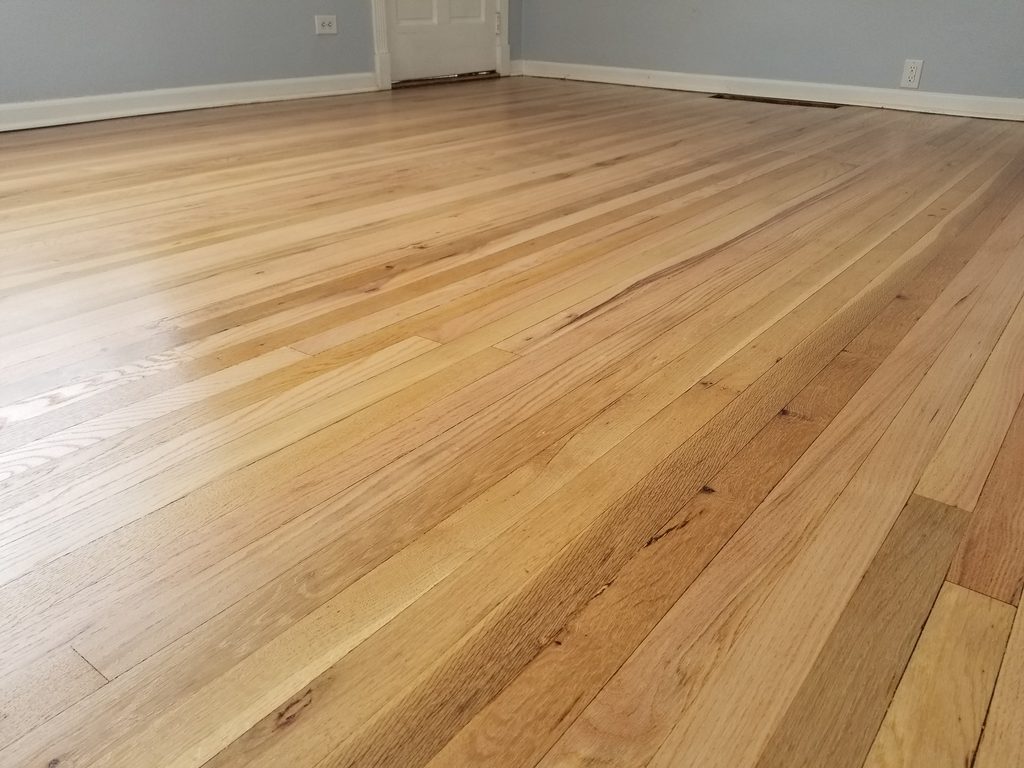
Include:
- City or general neighborhood
- Flooring type
- Exact project size: 700 sqft
- Existing condition
- Moisture and subfloor findings
- Recommended solution
- Materials and finish used
- Start-to-completion timeline
- Challenges discovered
- Final result
- Confirmed project price or price range, if the customer permits
- Original before-and-after photographs
Questions Homeowners Frequently Ask
How many flooring estimates should I obtain?
Two or three detailed estimates are usually enough to compare scope, communication, materials, and price. More estimates are not necessarily useful if the proposals cannot be compared on the same basis.
Should a flooring contractor perform moisture testing?
Moisture evaluation is particularly important for wood flooring and moisture-sensitive installation systems. The appropriate testing method depends on the flooring, subfloor, adhesive, and manufacturer requirements.
Is the lowest flooring estimate usually the best choice?
Not necessarily. Compare what each estimate includes. A low initial price may exclude preparation, repairs, delivery, transitions, disposal, or finish coats.
Can I stay home during floor refinishing?
That depends on the products, ventilation, layout, drying schedule, and ability to isolate the work area. Discuss occupants, children, pets, and health concerns before work begins.
How long should flooring acclimate in Colorado?
There is no universal number of days. Acclimation should be based on the product instructions, indoor conditions, site readiness, and moisture readings.
Are seasonal gaps in hardwood normal?
Small seasonal changes can occur as wood responds to indoor humidity. Large, persistent, or uneven gaps may require professional evaluation.
When should hardwood be replaced instead of refinished?
Replacement may be appropriate when the flooring is too thin to sand, structurally damaged, extensively affected by moisture, or unsuitable for the homeowner’s goals. Localized damage may sometimes be repaired without replacing the entire floor.
A Final Hiring Checklist
Before signing, confirm that you have:
- A clear diagnosis of the floor’s condition
- A written and itemized scope
- Product and installation details
- Moisture and subfloor evaluation plans
- Proof of insurance
- A realistic schedule
- Dust and home-protection procedures
- Written payment terms
- A change-order process
- Warranty information
- A direct contact for questions
- Copies of every signed document
The best floor contractor is not simply the person offering the lowest number. It is the company that understands the floor, explains the choices, documents the work, and provides a plan appropriate for your home.
Request a Denver Metro Flooring Estimate
Dream Flooring LLC provides hardwood floor installation and refinishing, Buff and Coat services, repairs, stair work, LVP and laminate installation, and other flooring services throughout the Denver Metro area.
To discuss your project, send photographs, approximate square footage, flooring type, property location, and a short description of the problem. Dream Flooring can review the information and arrange an on-site evaluation when needed.
Sources
- National Wood Flooring Association — Technical Guidelines
- Colorado Climate Center — Colorado Climate
- U.S. EPA — Best Practices for Indoor Air Quality When Remodeling Your Home
- U.S. EPA — Sources of Indoor Particulate Matter
Serving Metro Denver Area
- Denver Area
- Englewood Area
- Littleton Area
- Greenwood Village Area
- Centennial Area
- Highlands Ranch Area
- Lone Tree Area
- Erie Area
- Louisville Area
- Aurora Area
- Parker Area
- Castle Rock Area
- Castle Pines Area
- Glendale Area
- Lakewood Area
- Columbine Area
- Morrison Area
- Golden Area
- Wheat Ridge Area
- Arvada Area
- Westminster Area
- Commerce City Area
- Boulder Area
- Near me
- GOOGLE GUARANTEED
Serving Orange County Area
- Laguna Niguel Area
- San Clemente Area
- Laguna Beach Area
- Lake Forest Area
- Aliso Viejo Area
- Laguna Woods Area
- Dana Point Area
- San Juan Capistrano Area
- Ladera Ranch Area
- Rancho Mission Viejo Area
- Mission Viejo Area
- Irvine Area
- San Joaquin Hills Area
- Trabuco Canyon Area
- Coto De Casa Area
- Laguna Hills Area
- Turtle Rock Area
Hardwood flooring installation
Refinishing Hardwood Floors: A Comprehensive Guide
Vinyl flooring Installation
Epoxy garage Flooring
Laminate flooring installation
Hardwood floors refinishing
Wall wood decoration
Screening coat
#Tile #Installation
Floor repair
Choose finish for your hardwood floors
Different steps of wood flooring installation and refinishing
#hardwoodfloorinstallation #hardwoodfloorrefinishing #engineeredhardwoodinstallation #vinylflooringinstallation #epoxygarageflooring #laminateflooringinstallation #wallwooddecoration #screeningcoat #tileinstallation #oakflooring #mapleflooring #walnutflooring #bambooflooring #corkflooring #linoleumflooring #luxuryvinylplank #porcelainflooring #ceramictile #mosaictile #grayflooring #whitewashedfloors #herringboneflooring #parquetflooring #distressedwood #rusticflooring #modernflooring #industrialflooring #midcenturymodern #bohemiandecor #coastalstyle #flooringcontractor #tilingexpert #flooringcompany #flooringexperts #tilecontractor #flooringpros #flooringinstallation #tilinginstallation #homeimprovement #renovation #interiordesign #homedecor #remodeling #homerenovation #homeremodeling #homedesign #homeupgrade #floorcleaning #floorcare #floorpolishing #floorwaxing #flooringmaintenance #floorsealing #tilecleaning #tilemaintenance #groutcleaning #groutsealing #hardwoodflooring #hardwoodfloors #vinylplankflooring #epoxyflooring #laminatefloors #wallpaneling #walldecor #refinishfloors #flooringideas #tileideas #garageflooring #garagefloors #garagefloorcoating #floortrends #tilingtips #flooringtips #homediy #homeremodel #flooringdesign #tileinspiration #woodwalls #woodwalldecor #tilingdesign #flooringoptions #flooringchoices #flooringinstallationtips #flooringinstallationpros #tilinginstallationpros #tilinginstallationtips #floormakeover #flooringtransformation #tiletransformation #woodfloors #tilingprojects #floorspiration #tilinginspiration #flooringinstallationideas #tilinginstallationideas #flooringspecialists #tileexperts #hardwoodexperts #woodfloorrefinishing #woodflooringideas #tileflooring #woodflooringinstallation
#Denver #Englewood #HighlandRanch #Littleton #Boulder #Longmont #Leyner #Erie #Puritan #Lafayette #Louisville #Superior #Broomfield #Westminister #CommerceCity #Arvada #Aurora #WheatRidge #Lakewood #Golden #Littleton #GreenWoodVillage #Columbine #HighlandsRanch #Englewood #Centennial #LoneTree #Parker #CastlePines #CastleRock #sunsetbeach #huntingtonbeach #costamesa #newportbeach #coronadelmar #irvine #lagunabeach #lagunahills #lagunaniguel #danaPoint #sanjuancapistrano #ranchoMissionViejo #laderaranch #lasflores #missionviejo #Irvine #ranchosantamargarita #cotoDeCaza #trabucoCanyon #silveradocanyon #foothillranch #lakeforest #portolahills #lagunawoods #lagunahills #alisoViejo #sanclemente #sanonofre #capistranoBeach #monarchbeach #danapointca #danapointlife #sanjuancapistranoca #sanjuancaplife #ranchosantamargaritaca #ranchosantamargaritahomes #laderaranchca #laderalife #missionviejoca #missionviejohomes #sanclementeca #sanclementehomes #beachcities #orangecountybeaches #southorangecounty #oceancounty #socalliving #socalhomes #socalrealtor #socalrealestate