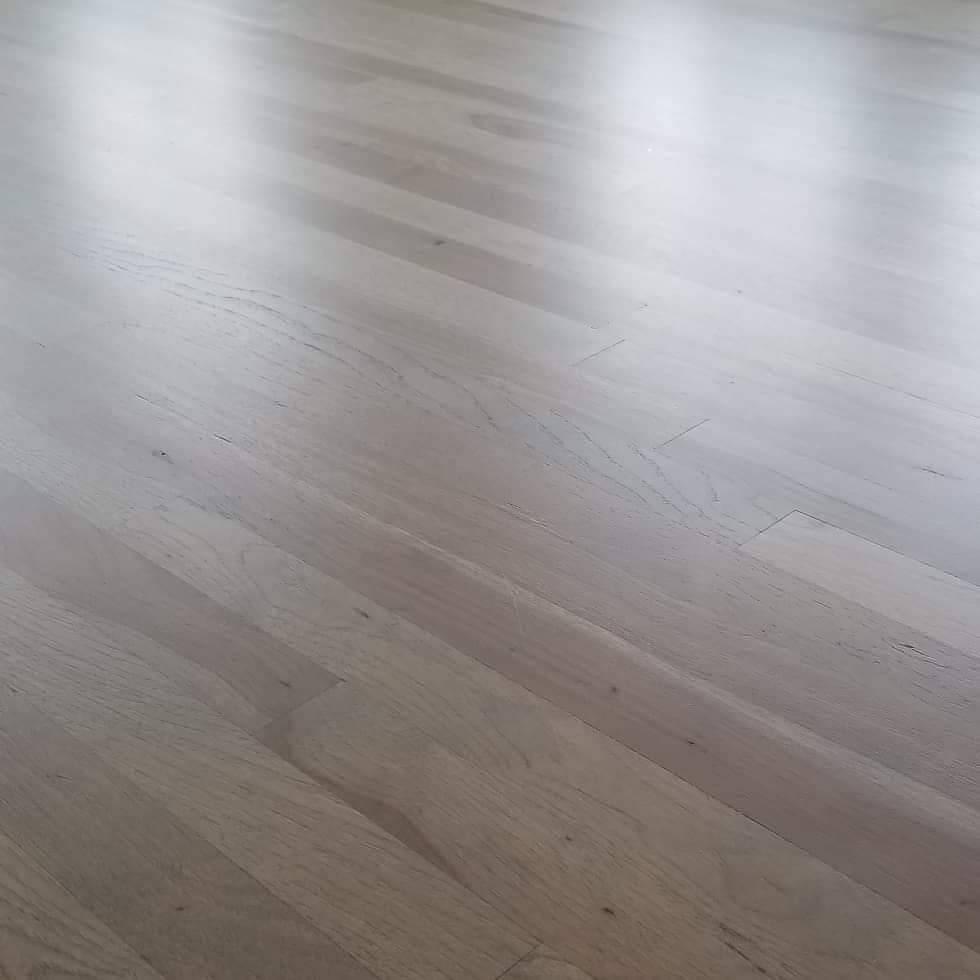
Wood flooring installation in Denver Metro typically costs about $8 to $25 per square foot when materials and professional installation are included. Labor alone commonly runs around $3 to $8 per square foot, depending on the type of hardwood, installation method, floor layout, subfloor condition, and project complexity.
For a straightforward 1,000-square-foot project, a realistic total budget can therefore range from approximately:
$8,000 to $25,000
The lower end generally applies to simpler installations and more economical wood products.
The higher end may include:
- Premium hardwood
- Wide-plank flooring
- Engineered white oak
- Subfloor repair
- Removal of existing flooring
- Stairs
- Lace-in work
- Herringbone or other patterns
- Custom finishing
- Complicated room layouts
Current Denver cost data from Angi places hardwood flooring around $3–$23 per square foot depending on the wood itself, with Denver-area installation labor commonly around $3–$8 per square foot. Large or premium projects can reach approximately $13–$25 per square foot or more once labor and materials are combined.
The biggest mistake homeowners make is asking only:
“What is your price per square foot?”
A useful estimate needs to explain what is included in that square-foot price.
Quick Wood Flooring Installation Cost Guide
Here is a practical starting range for Denver Metro homeowners:
| Project Component | Typical Planning Range |
|---|---|
| Hardwood installation labor | $3–$8 per sq. ft. |
| Basic hardwood + installation | $8–$15 per sq. ft. |
| Premium / wide-plank hardwood installed | $13–$25+ per sq. ft. |
| Engineered hardwood | Often $6–$16+ per sq. ft. total |
| Herringbone / complex pattern labor | $6–$12+ per sq. ft. |
| Subfloor repairs | Additional |
| Existing floor removal | Additional |
| Stairs | Usually priced separately |
| Baseboards / trim | Usually separate |
| Delivery / acclimation | May be separate |
These are planning ranges, not fixed quotes.
A 500-square-foot bedroom project and a 1,500-square-foot open first floor can have completely different cost structures.
How Much Does It Cost to Install 1,000 Sq. Ft. of Wood Flooring in Denver?
For 1,000 square feet, a reasonable 2026 planning range is approximately:
Budget / straightforward hardwood project
$8,000–$12,000
Mid-range hardwood or engineered project
$12,000–$18,000
Premium wide-plank, custom, or complex installation
$18,000–$25,000+
Angi’s Denver-specific 2026 data similarly estimates a 1,000-square-foot hardwood project at approximately $8,000–$25,000, depending on material and project complexity.
The actual number can change substantially once demolition, stairs, trim, repairs, or unusual installation patterns are included.
What Determines Wood Flooring Installation Cost?
Square footage matters, but it is only one part of the estimate.
Professional contractors look at several factors.
1. Solid Hardwood vs. Engineered Hardwood
This is one of the first major decisions.
Solid hardwood
Solid hardwood is made from one piece of wood.
Advantages include:
- Long lifespan
- Can often be sanded multiple times
- Traditional appearance
- Excellent resale appeal
- Many stain options
However, solid hardwood moves more as moisture conditions change.
That is particularly important in Colorado.
Engineered hardwood
Engineered hardwood uses a real wood surface over a layered core.
Advantages can include:
- Better dimensional stability
- Excellent wide-plank options
- More installation flexibility
- Better performance over some concrete applications
Current national pricing puts engineered hardwood broadly around $4.50–$16 per square foot, depending on product quality and installation, while solid hardwood can vary much more widely.
Neither is automatically better.
The right choice depends on the home.
2. Wood Species Changes the Price
Different species can have dramatically different material costs.
Common choices include:
- Red oak
- White oak
- Maple
- Hickory
- Walnut
- European oak
- Specialty hardwoods
Traditional red oak remains one of the more economical real-hardwood options.
White oak is currently extremely popular and often costs more, particularly in wider planks and premium grades.
Walnut and specialty hardwoods can increase material costs significantly.
3. Plank Width Matters
A major flooring trend in 2026 is wide-plank hardwood.
Traditional Denver homes often contain:
- 2¼-inch oak
- 3¼-inch oak
Modern installations increasingly use:
- 5-inch boards
- 7-inch boards
- 9-inch boards
- Even wider products
Current Colorado reporting shows very strong demand for ultra-wide white oak. One Castle Rock flooring company reports that white oak planks 9 inches and wider in natural matte finishes make up about 40% of its current hardwood work.
Wide plank often costs more because:
- Material is more expensive
- Premium products are common
- Subfloor flatness becomes more important
- Installation tolerances are tighter
- Wood movement becomes more important
4. Colorado’s Dry Climate Affects Installation
This is one of the most important differences between installing hardwood in Colorado and installing it in a more humid climate.
Wood responds to moisture.
During Colorado’s dry winter months, hardwood can lose moisture and shrink.
During more humid periods, it can expand.
That affects:
- Acclimation
- Expansion gaps
- Moisture testing
- Plank width selection
- Installation method
Wide boards are particularly sensitive because wider pieces of wood experience more dimensional movement.
Current Colorado flooring guidance specifically notes that wide plank requires greater attention to moisture and that engineered wide-plank flooring is often selected because of its additional stability in Colorado’s dry winters.
This is why proper wood flooring installation should include more than simply bringing boxes into the house and immediately nailing the floor down.
5. Acclimation Can Affect the Project
Depending on the flooring manufacturer and installation system, hardwood may need to reach appropriate moisture conditions before installation.
This does not mean there is a universal rule such as:
“Every hardwood floor must sit in the house for exactly three days.”
Correct acclimation depends on:
- Wood species
- Product construction
- Manufacturer instructions
- Indoor conditions
- Moisture readings
- Subfloor moisture
A professional installer should evaluate conditions rather than relying only on the calendar.
6. Subfloor Condition Can Change the Price Dramatically
Homeowners often focus entirely on the visible hardwood.
But the finished floor is only as good as the surface underneath it.
Common subfloor problems include:
- Uneven areas
- Loose plywood
- Squeaks
- Water damage
- Rot
- High or low spots
- Previous patching
- Concrete moisture issues
Minor corrections may add relatively little.
Major subfloor replacement can add thousands of dollars to the job. National 2026 estimates put substantial subfloor repairs in approximately the $900–$3,000 range, with more extensive replacement potentially higher.
If the contractor quotes installation without inspecting the existing floor condition, ask how subfloor problems will be handled if discovered.
7. Existing Flooring Removal Costs Extra
If the house currently has:
- Carpet
- Tile
- Hardwood
- Laminate
- LVP
that material may need to be removed before installation.
Carpet is normally easier and less expensive to remove than tile or glued flooring.
Tile removal can require:
- Demolition
- Thinset removal
- Dust containment
- Subfloor correction
- Disposal
Do not assume demolition is included in a flooring installation quote unless it is specifically listed.
8. Nail-Down, Glue-Down, and Floating Installation Cost Different Amounts
Wood flooring can be installed using several methods.
Nail-down
Common for solid hardwood installed over wood subfloors.
Glue-down
Frequently used with certain engineered hardwood products and concrete applications.
Glue-down installation can cost more because of:
- Adhesive
- Surface preparation
- More demanding installation conditions
- Cleanup
- Working time
Floating
Some engineered wood systems lock together and float above the subfloor.
This may reduce some installation labor but requires the correct underlayment and a sufficiently flat substrate.
The flooring product generally determines which methods are approved.
9. Site-Finished vs. Prefinished Hardwood
There are two fundamentally different types of hardwood installation.
Prefinished hardwood
Boards arrive already stained and coated.
Advantages:
- Faster installation
- No sanding on site
- Less project downtime
- Factory-controlled coating
Site-finished hardwood
Unfinished wood is installed first.
Then the entire floor is:
- Sanded
- Prepared
- Stained if desired
- Sealed
- Finished
This adds labor and time, but it provides major advantages.
The finished floor can have:
- Custom stain
- More uniform surface
- Filled nail holes
- Customized sheen
- Seamless appearance
Site finishing generally adds additional cost beyond basic installation.
10. Stairs Can Add Significant Cost
Stairs should not be calculated simply by square footage.
A staircase requires much more detailed work.
Depending on the project, installers may need to work with:
- Treads
- Risers
- Nosing
- Landings
- Stringers
- Railings
- Balusters
A staircase containing only a small amount of wood can involve many hours of labor.
That is why stairs are normally priced separately.
11. Lace-In Work Costs More Than Straight Installation
A lace-in is required when new hardwood needs to connect naturally with existing hardwood.
For example:
A homeowner removes carpet from a dining room and wants the new hardwood to continue seamlessly into the existing kitchen.
Instead of creating a straight transition line, boards can be removed selectively so the new wood is woven into the old flooring.
This requires:
- Careful removal
- Board matching
- Cutting
- Fitting
- Additional sanding and blending
Lace-in work produces a much more natural result but costs more than simply installing against a transition strip.
12. Herringbone and Chevron Increase Installation Cost
Straight plank installation is usually the least expensive.
Patterns such as:
- Herringbone
- Chevron
- Parquet
require significantly more labor.
Angi currently estimates complex hardwood patterns at roughly $6–$12 per square foot for labor alone, compared with about $3–$8 for typical straight-lay Denver installations.
Patterned flooring also creates more waste because boards must be cut repeatedly.
13. Furniture Moving Can Add Cost
The installation area normally needs to be empty before work begins.
Homeowners can often save money by removing:
- Small furniture
- Decorations
- Boxes
- Electronics
before the installers arrive.
Large furniture, appliances, pool tables, pianos, and similar items may require additional arrangements.
Denver flooring cost data currently puts professional furniture moving at roughly $75–$200 per hour per mover when separately hired.
14. Baseboards and Trim Matter
New hardwood can change the finished floor height.
Installers may need to address:
- Baseboards
- Shoe molding
- Quarter-round
- Door casings
- Transitions
- Exterior doors
Some homeowners reuse existing trim.
Others replace it during the flooring project.
These decisions should be made before installation whenever possible.
How Much Should Hardwood Installation Labor Cost?
For Denver Metro, a broad professional labor range is approximately:
$3–$8 per square foot for standard hardwood installation.
More complicated work can cost more.
For example:
- Herringbone
- Glue-down hardwood
- Lace-in installation
- Difficult subfloor preparation
- Stair work
- Custom borders
can push labor significantly higher.
A very low labor price should be examined carefully.
Ask whether it includes:
- Layout
- Moisture checks
- Expansion space
- Transitions
- Doorways
- Cleanup
- Furniture
- Trim
- Disposal
Two quotes with the same square footage may describe very different jobs.
Should You Buy the Hardwood Yourself?
Sometimes.
Buying material directly can make sense when:
- You already know the exact product
- You can order enough material
- You understand waste requirements
- You can coordinate delivery
- You can store the material correctly
But homeowners should be careful about buying only the exact measured square footage.
Projects normally require extra material for:
- Cuts
- Defects
- Waste
- Future repairs
Patterns such as herringbone require even more waste allowance.
Discuss the required quantity with the installer before ordering.
Is Engineered Hardwood Cheaper Than Solid Hardwood?
Sometimes, but not always.
Basic engineered hardwood can cost less than premium solid hardwood.
However, high-quality wide-plank engineered white oak can be more expensive than traditional narrow solid red oak.
The word engineered does not mean inexpensive.
There are major quality differences in:
- Wear-layer thickness
- Core construction
- Finish quality
- Board length
- Width
- Grade
A premium engineered floor is still a premium hardwood floor.
What Wood Flooring Is Trending in Colorado Right Now?
The strongest current direction is:
Natural-looking wide-plank hardwood.
National Wood Flooring Association data shows increasing consumer demand for:
- Natural wood colors
- Light tones
- Brown tones
- Longer and wider boards
- Engineered wood
- Matte finishes
White oak remains a dominant domestic species, while demand for gray and red-toned flooring continues to decline.
Across Denver-area projects, warm colors such as:
- Honey
- Caramel
- Chestnut
- Natural oak
are increasingly replacing the cool gray palette that dominated several years ago.
Wood Flooring Installation Cost in Denver
Denver contains everything from older narrow-strip oak floors to modern downtown and suburban remodels.
For standard straight-lay hardwood, installation labor currently falls around $3–$8 per square foot, while complete projects frequently land around $8–$25 per square foot depending on the material.
In older Denver homes, additional costs can come from:
- Uneven subfloors
- Existing hardwood removal
- Older transitions
- Small rooms
- Doorway details
- Matching original flooring
Original hardwood should also be evaluated before replacement.
In some houses, refinishing existing solid oak makes better financial sense than installing new flooring.
Wood Flooring Installation in Highlands Ranch
Highlands Ranch homes commonly have larger open main levels.
This works well for continuous hardwood installation because long sightlines make the floor a major design feature.
Current strong choices include:
- Natural white oak
- Engineered wide plank
- Warm oak
- Medium natural brown
- Matte or satin finish
A large open floor may reduce some installation complexity, but kitchens and islands create additional cutting and detail work.
If carpet is being replaced with hardwood next to an existing wood floor, lace-in work may also need to be priced.
Wood Flooring Installation in Castle Rock
Castle Rock is one of the strongest local markets for the current wide-plank white-oak look.
Current local 2026 reporting identifies 9-inch-and-wider natural matte white oak as a major trend.
However, homeowners need to consider Colorado’s climate carefully with very wide boards.
Engineered wide-plank products are frequently worth considering because of their dimensional stability during Colorado’s dry winters.
The material itself can cost more, but selecting the correct product is usually cheaper than dealing with movement problems later.
Wood Flooring Installation in Castle Pines
Castle Pines homeowners are increasingly choosing premium wood products such as:
- Wide engineered white oak
- Longer boards
- Natural finishes
- Wire-brushed textures
- Matte surfaces
These materials create a high-end mountain-modern appearance.
They are also usually on the higher end of the installation-cost range.
Large continuous areas make subfloor preparation particularly important because unevenness becomes easier to notice across long, wide boards.
Wood Flooring Installation in Parker
Parker homeowners often need to balance appearance with durability.
Children, dogs, and heavy everyday use influence product selection.
Practical hardwood choices include:
- White oak
- Red oak
- Quality engineered hardwood
- Medium natural colors
- Satin or matte finishes
Current local flooring reports also show strong demand for durable waterproof LVP among Parker families, which means homeowners often compare real wood against high-quality vinyl before making the final decision.
If long-term refinishing capability and real-wood value matter most, hardwood may justify the higher initial cost.
Wood Flooring Installation in Centennial
Centennial has many homes that already contain traditional red oak in part of the house.
One common project is extending hardwood into an adjacent:
- Family room
- Dining room
- Office
- Hallway
In these projects, the challenge is not simply installing new wood.
The contractor may need to:
- Match board width
- Match species
- Lace in the new floor
- Sand old and new areas together
- Match stain
That makes the labor more expensive than an installation in an empty new room.
But when done correctly, the result can look like one continuous original floor.
Wood Flooring Installation in Littleton
Littleton’s housing varies widely by neighborhood and age.
Older homes may require more preparation because of:
- Uneven subfloors
- Original hardwood
- Multiple previous floor coverings
- Small rooms
- Old doorway transitions
The good news is that older solid hardwood may sometimes be preserved.
Before tearing it out, determine whether refinishing or extending the existing hardwood would make more sense.
For new installations, traditional oak and modern engineered white oak can both fit Littleton homes depending on the architecture.
Wood Flooring Installation in Lone Tree
Lone Tree’s large open layouts are particularly well suited to wide-plank hardwood.
Natural white oak, warm beige, honey, and medium natural colors fit current design trends.
Large projects can also make material selection extremely important.
A difference of only $3 per square foot in material price becomes:
$4,500 on a 1,500-square-foot project.
This is why homeowners should compare:
- Wear layer
- Wood grade
- Board length
- Warranty
- Finish
- Construction
rather than choosing only by sample color.
Is Expensive Hardwood Always Better?
No.
Price is influenced by:
- Species
- Grade
- Manufacturing
- Width
- Length
- Origin
- Finish
- Brand
A more expensive floor is not automatically the right floor for every house.
The goal should be to choose a product suitable for:
- Colorado climate
- Subfloor
- Household traffic
- Pets
- Design
- Budget
- Future maintenance
A good contractor should be able to explain why a particular floor works for the project.
How Can You Reduce Wood Flooring Installation Cost?
There are several sensible ways to control the budget.
Remove furniture yourself
If practical.
Remove easy flooring yourself
Carpet removal can sometimes be handled by the homeowner.
Choose straight installation
Instead of herringbone or other patterns.
Use traditional plank widths
Premium ultra-wide material often costs more.
Keep good existing hardwood
Do not automatically replace wood that can be refinished.
Plan the entire area together
Multiple small projects can create repeated setup and transition costs.
Compare equivalent estimates
Make sure every quote includes the same scope.
What Should Be Included in a Wood Flooring Estimate?
A professional quote should identify:
- Square footage
- Wood product
- Material cost
- Installation labor
- Demolition
- Disposal
- Subfloor preparation
- Installation method
- Transitions
- Stairs
- Baseboards
- Delivery
- Finishing if applicable
- Furniture responsibilities
- Project schedule
- Payment terms
A quote that simply says:
“1,000 sq. ft. hardwood — $10,000”
does not tell you enough to compare contractors properly.
Our Professional Recommendation
If you are researching “How Much Does Wood Flooring Installation Cost in Denver Metro?”, start with approximately:
$8–$25 per square foot including wood and installation
and approximately:
$3–$8 per square foot for standard professional installation labor
as broad Denver planning ranges.
Then adjust for:
- Wood species
- Engineered vs solid
- Plank width
- Subfloor
- Demolition
- Stairs
- Installation method
- Pattern
- Finishing
The price per square foot becomes meaningful only after those details are known.
For homeowners who want a project-specific estimate, Dream Flooring LLC — (303) 330-0575 provides hardwood installation and related flooring services throughout Denver Metro.
Final Answer: How Much Does Wood Flooring Installation Cost in Denver Metro?
Most Denver Metro homeowners should budget approximately $8–$25 per square foot for professionally installed hardwood flooring, including materials, with standard installation labor often around $3–$8 per square foot.
For 1,000 square feet, that puts many projects in roughly the:
$8,000–$25,000 range.
A basic red-oak installation may land near the lower end.
Premium wide-plank engineered white oak, herringbone, stair work, demolition, or significant subfloor repair can push the project substantially higher.
In Colorado, price should not be the only consideration.
Moisture conditions, wood acclimation, subfloor preparation, expansion planning, and product construction matter because our dry climate creates significant seasonal movement.
And in 2026, the strongest local design trend continues to be toward natural white oak, wider planks, warmer colors, and matte or satin finishes, while cool gray flooring continues to lose popularity.
The best estimate is not necessarily the cheapest number.
It is the estimate that clearly explains what flooring is being installed, how it will be installed, what preparation is required, and exactly what is included in the price.