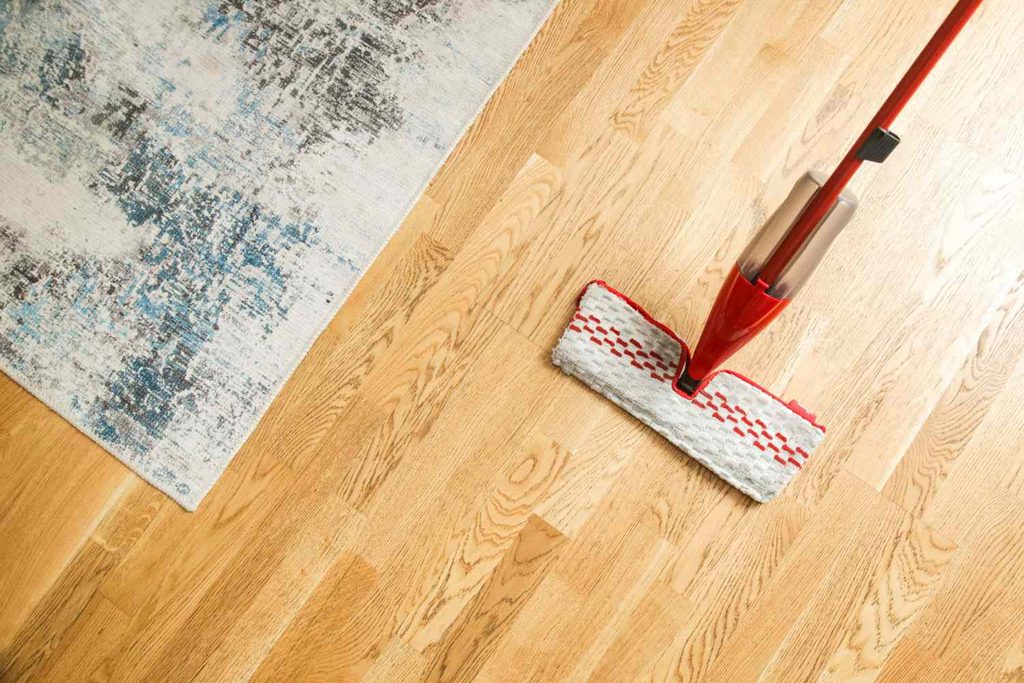
Most professionally refinished hardwood floors take about 3 days to fully cure when a modern high-performance water-based finish is used, but some finishes take considerably longer.
The exact cure time depends on:
- The finish product
- Number and thickness of coats
- Temperature
- Relative humidity
- Ventilation
- Stain used underneath
- Size of the refinished area
- Whether the finish is water-based, oil-based, or another system
One of the most important things homeowners should understand is this:
Dry, walkable, and fully cured do not mean the same thing.
A hardwood floor may feel dry within hours and may even allow careful foot traffic before it has developed its full hardness and resistance to scratches, furniture pressure, rugs, moisture, and normal household use.
Quick Answer: How Long Does Hardwood Floor Finish Take to Cure?
For some premium professional two-component water-based finishes, full cure is approximately 3 days.
For example, LOBA currently lists 2K Supra A.T. as ready for normal traffic after about 12 hours and fully cured after 3 days under proper conditions.
Bona’s U.S. guidance for Traffic HD says the finish can be walked on before full cure but reaches full cure in approximately 3 days.
Other finishing systems — particularly traditional oil-based or specialty finishes — can require longer.
That is why the answer should always be based on the exact product used on your floor.
Drying vs. Curing: What Is the Difference?
This distinction is extremely important.
Dry to Touch
The finish no longer feels wet.
This can happen relatively quickly.
But the coating is still developing strength.
Ready for Recoat
The contractor can apply another finish coat.
For some professional water-based products, this may be only a few hours after application.
LOBA 2K Supra A.T., for example, can typically be recoated after approximately 2–3 hours under proper conditions.
Ready for Foot Traffic
The finish has developed enough strength for limited or normal walking.
Depending on the product, this may be around 12–24 hours.
Fully Cured
The finish has developed its intended final hardness and chemical resistance.
This is the stage that matters for:
- Rugs
- Heavy furniture
- Pets
- Normal household traffic
- Cleaning
- Everyday wear
A floor can therefore be walkable without being fully cured.
Why Does Hardwood Finish Need Time to Cure?
A floor finish does much more than simply “dry.”
As it cures, the coating develops the physical and chemical properties that protect the wood.
These include:
- Scratch resistance
- Scuff resistance
- Chemical resistance
- Water resistance
- Hardness
- Adhesion
- Durability
With two-component finishes, the curing process includes a chemical reaction between the finish and hardener.
That process continues after the surface appears dry.
Putting a heavy dining table on a partially cured floor can therefore damage a surface that seemed perfectly dry when touched.
How Long Does Water-Based Hardwood Finish Take to Cure?
Modern professional waterborne finishes can cure surprisingly quickly.
For example, LOBA 2K Supra A.T. currently lists:
- Recoating: approximately 2–3 hours
- Normal traffic: approximately 12 hours
- Full cure: approximately 3 days
under recommended conditions.
Bona Traffic HD is another fast-curing professional system. Bona’s U.S. homeowner guidance states that the floor can be walked on within hours but requires approximately 3 days for full cure.
These fast cure times are one reason modern water-based finishes are popular in residential refinishing.
They significantly reduce downtime compared with many older finish systems.
How Long Does Oil-Based Polyurethane Take to Cure?
Traditional oil-based polyurethane generally takes longer than premium fast-curing waterborne systems.
It may become dry enough for careful traffic before it reaches full hardness.
The exact timing varies substantially by manufacturer, formulation, coat thickness, ventilation, temperature, and humidity.
Rather than using a universal internet rule like “wait exactly seven days,” homeowners should request the product name and follow that manufacturer’s current technical instructions.
The important point is:
Oil-based polyurethane is usually not fully cured simply because it feels dry.
What Factors Make Hardwood Finish Cure More Slowly?
Several conditions can extend cure time.
High Humidity
Waterborne finishes depend partly on moisture leaving the coating.
Higher indoor humidity can slow drying and curing.
Low Temperature
Cooler conditions generally slow chemical reactions and evaporation.
Poor Ventilation
Insufficient airflow can increase drying time.
LOBA specifically notes that inadequate ventilation, high humidity, lower temperatures, and excessive coat thickness can significantly prolong cure time.
Heavy Finish Application
More product is not necessarily better.
Finish applied too heavily can take longer to cure and may not perform as intended.
Professional flooring finishes have specific recommended application rates.
Stain That Has Not Dried Properly
Applying finish over stain before the stain is ready can create problems.
The staining stage should not be rushed simply to shorten the project.
Multiple Coats
Each coat needs proper drying before the next step.
The entire system — not only the final coat — needs to be applied according to manufacturer specifications.
Can You Walk on Refinished Floors Before They Are Fully Cured?
Often, yes.
But carefully.
Some professional finishes allow light or normal traffic well before full cure.
During this period:
- Wear clean socks
- Avoid shoes when instructed
- Do not drag furniture
- Keep pets off unless approved
- Avoid unnecessary traffic
- Do not cover the floor prematurely
If your contractor says you may walk on the floor after 12 or 24 hours, that does not automatically mean you should move everything back into the room.
When Can Furniture Go Back on Refinished Floors?
This depends on the finish.
A chair or table places far more concentrated pressure on a floor than a person walking across it.
Returning furniture too early can create:
- Pressure marks
- Scratches
- Dents
- Finish deformation
With fast-curing 2K waterborne finishes, the timetable may be relatively short, but the product instructions should still control the decision.
When furniture returns:
- Lift it instead of dragging
- Install clean felt pads
- Avoid rolling appliances across the floor
- Do not immediately place extremely heavy objects if the finish has not fully cured
When Can You Put Rugs on Refinished Hardwood?
Rugs are another area where homeowners often move too quickly.
A rug covers the finish and can affect curing.
Some rug pads also contain materials that may interact with finishes.
LOBA specifically advises not covering floors or replacing rugs before final cure has been reached.
If your finish takes three days to fully cure, waiting until full cure before replacing rugs is generally the safer approach unless the manufacturer says otherwise.
When Can Pets Walk on Refinished Hardwood Floors?
Pets create more stress on a curing floor than humans often realize.
Dogs can cause damage through:
- Claws
- Sudden turns
- Running
- Dirt on paws
- Water around bowls
A floor that can support an adult walking carefully may still be vulnerable to a 70-pound dog running across it.
We generally recommend waiting until the finish manufacturer allows normal use and being conservative with pets during the early cure period.
When Can You Clean Refinished Hardwood Floors?
Do not wet-clean a freshly finished floor too early.
Even if normal walking is allowed, the finish may not yet have its full resistance to moisture and cleaning chemicals.
LOBA’s technical guidance, for example, says not to damp mop before final cure.
Follow the exact finish manufacturer’s cleaning schedule and use products compatible with that finish.
Does Stain Change the Cure Time?
Yes, potentially.
The stain is applied before the protective finish.
If it dries slowly because of:
- Dark color
- High humidity
- Low temperature
- Poor airflow
- Heavy application
the finishing schedule may need to be delayed.
Applying polyurethane too early over improperly dried stain can create adhesion or appearance problems.
A professional contractor should evaluate the stain before proceeding rather than working from the clock alone.
Does Colorado’s Dry Climate Make Floors Cure Faster?
Sometimes drying may proceed efficiently in Colorado’s dry environment, but dry air does not mean cure times can be ignored.
Professional finishes are designed for specific ranges of:
- Temperature
- Relative humidity
- Airflow
- Application thickness
Extremely dry conditions can also affect application behavior.
For example, a product may lose working time more quickly when conditions are warm and dry.
The goal is not to make the floor cure as fast as physically possible.
The goal is to keep conditions within the finish manufacturer’s recommended range so the coating cures correctly.
Colorado Hardwood Flooring Trends in 2026
Current hardwood trends make fast-curing professional finishes particularly relevant.
According to the National Wood Flooring Association’s 2026 industry outlook, homeowners are increasingly choosing:
- Natural wood colors
- Light tones
- Brown tones
- Longer and wider boards
- White oak
- Engineered hardwood
- Matte finishes
At the same time, demand for gray and red-toned floors is declining.
These trends often pair especially well with modern clear waterborne finishes because they can preserve a lighter, more natural wood appearance without the heavy amber tone associated with some traditional systems.
Denver
In Denver, natural oak and warmer neutral flooring continue to fit both older homes and modern remodels.
Many older Denver properties already contain high-quality oak.
Instead of replacing it, homeowners can often sand and refinish the existing floor into:
- Natural oak
- Light warm brown
- Honey
- Neutral brown
- Matte or satin finishes
For busy households, choosing a modern fast-curing finish can reduce the amount of time the main living areas remain out of service.
Highlands Ranch
Highlands Ranch homes frequently have large continuous hardwood areas connecting:
- Kitchens
- Dining rooms
- Living rooms
- Hallways
That makes cure time especially important.
A difference of several days can have a major impact when the entire first floor is involved.
The current trend toward lighter, warmer, more natural hardwood also fits these open-plan interiors particularly well.
Local 2026 flooring reporting notes that Highlands Ranch buyers are choosing noticeably different, more natural styles than they did several years ago.
Castle Rock
Castle Rock is one of the clearest examples of the current white-oak trend.
A 2026 local flooring report says white oak planks 9 inches and wider in natural matte finishes account for roughly 40% of that company’s current hardwood projects.
For existing hardwood, you cannot create wider boards through refinishing, but you can move the floor toward the same design direction using:
- Natural color
- Warm neutral stain
- Matte finish
- Satin finish
Fast-curing modern coatings also reduce downtime in the large open spaces common in newer Castle Rock homes.
Castle Pines
Castle Pines homeowners are also leaning toward upscale natural hardwood looks.
Wide engineered white oak, visible grain, subtle texture, and low-sheen finishes fit the current mountain-modern aesthetic.
When refinishing instead of replacing, achieving a clean natural appearance often depends on using a finish that stays clear rather than strongly ambering the wood.
Parker
Parker households often have children, dogs, and busy living spaces.
That makes durability just as important as color.
Current natural and medium warm tones are practical because they hide everyday dirt and wear better than extremely dark floors.
For these homes, cure time matters especially when pets need access through the main level.
Even if humans can walk on the floor, it can make sense to keep dogs away longer until the finish has developed greater hardness.
Centennial
Centennial contains many homes with existing red oak.
Instead of replacing those floors, homeowners can often update the appearance by refinishing them into:
- Natural
- Honey
- Neutral brown
- Medium warm brown
- Satin or matte
A fast-curing waterborne finish can also help preserve a more natural color instead of adding excessive amber tone.
Littleton
Littleton has both older character homes and newer suburban properties.
Original hardwood in older homes can be worth preserving.
For these projects, a contractor may need extra preparation and repairs before finishing.
That means the sanding stage may take longer, even though the finish itself can still reach full cure relatively quickly with a modern professional system.
Lone Tree
Lone Tree’s large open-plan interiors are particularly well suited to natural hardwood and lower-sheen finishes.
However, these large continuous areas create a practical problem during refinishing:
The whole level may effectively be out of service while the coating cures.
A fast-curing finish can therefore have genuine practical value, not just marketing value.
Matte and Satin Finishes Are Leading the Market
The finish sheen does not substantially change the fundamental importance of cure time, but it does change the appearance of the completed floor.
NWFA’s 2026 outlook shows especially strong demand for matte and satin finishes, while natural wood and light colors remain popular.
Lower-sheen finishes also have a practical benefit:
They generally make minor scratches, dust, and surface imperfections less obvious than very glossy flooring.
That makes them especially attractive for active Colorado homes.
Does a Floor Continue Getting Harder After You Start Using It?
Yes.
This is why early-use instructions matter.
A finish may have enough strength for walking before reaching its maximum cure.
Think of cure as a progression rather than a switch.
A simplified example might look like:
A few hours: finish appears dry
12–24 hours: limited or normal traffic may be allowed
Several days: full cure for some premium waterborne finishes
The exact schedule comes from the actual product.
Do not assume the same timeline applies to every floor finish.
How Can You Help a Floor Cure Correctly?
Homeowners can help by following a few simple rules:
- Maintain appropriate indoor temperature
- Maintain reasonable humidity
- Follow ventilation instructions
- Keep traffic off the floor for the required period
- Keep pets away
- Avoid rugs until permitted
- Do not wet-clean early
- Lift furniture rather than dragging it
- Do not cover the floor with plastic
The first few days can have a major impact on how the finish performs long-term.
Common Mistakes After Hardwood Refinishing
Moving Furniture Back Too Soon
A floor that feels dry can still be vulnerable to pressure.
Letting Dogs Run on It
Claws can damage a partially cured coating.
Putting Rugs Down Immediately
This can interfere with curing.
Wet Mopping Too Early
The coating may not yet have developed its full chemical and moisture resistance.
Closing the House Completely
Proper ventilation may be necessary for drying and indoor air quality.
Assuming “24 Hours” Applies to Every Finish
Different products have dramatically different cure schedules.
How Do You Know Which Cure Time Applies to Your Floor?
Ask your contractor for:
- Exact stain name
- Exact finish manufacturer
- Exact finish product
- Number of coats
- Light-traffic time
- Furniture-return time
- Rug-return time
- Pet-return recommendation
- Full cure time
- Cleaning instructions
A professional contractor should be able to answer these questions.
“It’s polyurethane” is not specific enough.
Our Professional Recommendation
For homeowners asking “How long do refinished floors take to cure?”, a good general planning assumption for many modern professional water-based systems is about 3 days for full cure.
However, you may be able to walk on the floor much sooner.
The exact timeline must come from the finish used on your project.
Do not confuse:
Dry → Walkable → Fully cured
They are different stages.
For Denver Metro homeowners planning hardwood refinishing, Dream Flooring LLC — (303) 330-0575 provides hardwood floor sanding, staining, refinishing, repairs, buff & coat, and installation.
Final Answer: How Long Do Refinished Floors Take to Cure?
Many modern professional water-based hardwood finishes fully cure in approximately 3 days.
LOBA 2K Supra A.T., for example, lists normal traffic after roughly 12 hours and full cure after three days. Bona also states that Traffic HD reaches full cure in approximately three days.
But not every refinished floor uses those products.
Oil-based and specialty systems can require longer.
Temperature, humidity, ventilation, stain drying, application thickness, and the number of coats can also extend the timeline.
The safest rule is:
Walk on the floor only when the manufacturer allows it, return furniture carefully, keep rugs and wet cleaning off until permitted, and treat full cure — not just surface dryness — as the point when the floor is ready for normal life.