Yes. In most cases, it is significantly cheaper to refinish existing hardwood floors than to replace them.
In 2026, professional hardwood floor refinishing typically costs around $3 to $8 per square foot, while installing new hardwood in the Denver area can commonly run around $8 to $25 per square foot including materials and labor, depending on the wood, layout, demolition, and installation method.
That means a structurally sound hardwood floor can often be restored for a fraction of the cost of removing it and installing new wood.
But there are exceptions.
If the flooring has severe water damage, extensive pet urine penetration, structural problems, major warping, rot, or has already been sanded too many times, replacement may be the better investment.
The key question is not simply:
“Which one costs less?”
It is:
“Does the hardwood I already have still have enough life left to justify refinishing?”
Refinishing vs. Replacement Cost: Quick Comparison
For a typical Denver Metro project:
| Project | Typical Cost |
|---|---|
| Screen and recoat | $1–$3 per sq. ft. |
| Full hardwood refinishing | $3–$8 per sq. ft. |
| New hardwood installation | $8–$25+ per sq. ft. |
| Stairs | Usually priced separately |
| Major repairs | Usually additional |
Denver-area cost guides currently place refinishing at approximately $3–$8 per square foot. New hardwood installation varies much more because you are paying not only for labor but also for new flooring material and often demolition, disposal, subfloor preparation, transitions, and trim work.
Example: 1,000 Square Feet
A 1,000-square-foot hardwood floor might cost approximately:
Refinishing:
$3,000–$8,000
Replacement:
Potentially $8,000–$25,000 or more
This is why refinishing should usually be evaluated before replacement.
Why Is Refinishing So Much Cheaper?
When you refinish hardwood, you are keeping the most expensive part of the floor:
the wood itself.
The contractor sands away the worn finish and a very thin layer of wood, repairs problem areas when necessary, and applies a new stain and/or protective finish.
Replacement is a completely different project.
It can involve:
- Removing the existing hardwood
- Loading and disposing of old flooring
- Inspecting and repairing the subfloor
- Purchasing new hardwood
- Delivering and acclimating the wood
- Installing new flooring
- Sanding and finishing unfinished wood, if applicable
- Reinstalling trim and transitions
- Repairing areas around doors, cabinets, and stairs
That additional material and labor explains the large price difference.
When Should You Refinish Hardwood Instead of Replace It?
We generally recommend considering refinishing first when the existing wood is structurally sound.
Refinishing is often appropriate when the floor has:
- Surface scratches
- Worn finish
- Dull areas
- Minor discoloration
- Old stain color
- Light pet damage
- Normal traffic wear
- Small isolated repairs
- Areas where the protective finish has worn away
These problems may look dramatic, but they often affect only the surface.
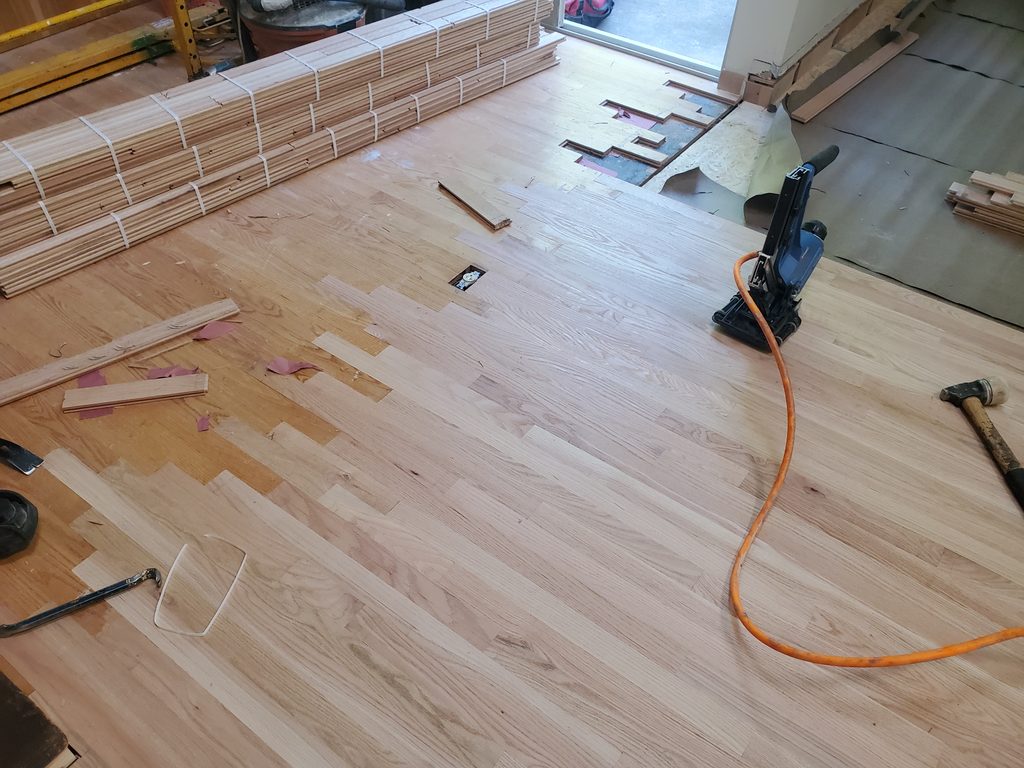
After professional sanding, a floor that looked 30 years old can sometimes look almost new again.
Hardwood Can Often Be Refinished More Than Once
Quality solid hardwood has one major advantage over many other flooring materials:
it can often be renewed instead of replaced.
A typical 3/4-inch solid hardwood floor can often be professionally sanded multiple times during its lifetime, provided enough wood remains above the tongue-and-groove joint.
Engineered hardwood is different.
Some engineered floors have a sufficiently thick real-wood wear layer and can be refinished. Others have such a thin veneer that aggressive sanding would damage the floor.
Before recommending refinishing, a contractor should determine what type of flooring is installed and how much usable wood remains.
When Is Replacement the Better Choice?
Refinishing is cheaper, but cheaper does not automatically mean correct.
There are situations where putting money into refinishing makes little sense.
1. Severe Water Damage
Minor isolated water damage can sometimes be repaired by replacing affected boards.
But extensive moisture damage can cause:
- Cupping
- Crowning
- Warping
- Rot
- Mold problems
- Subfloor damage
When damage extends through the flooring rather than remaining on the surface, replacement may be necessary.
2. Extensive Pet Urine Damage
Surface pet stains can sometimes sand out.
Deep urine contamination is different.
If urine has penetrated deeply into the hardwood or subfloor, sanding may improve the appearance without completely eliminating the odor or discoloration.
In severe cases, damaged boards should be replaced.
3. Too Little Wood Remains
Every full sanding removes a small amount of wood.
If a floor has already been refinished many times, the remaining layer above the tongue may be too thin for another aggressive sanding.
A professional should inspect this before refinishing.
4. Structural Problems
Refinishing will not fix:
- Moving subfloor
- Severe squeaks caused by structural problems
- Rot
- Joist problems
- Major moisture issues
Those conditions need to be corrected first.
5. You Want a Completely Different Floor
Sometimes replacement is a design decision rather than a repair decision.
For example, you may have traditional 2¼-inch red oak but want:
- 7- to 10-inch white oak
- Engineered wide plank
- Herringbone
- Chevron
- A different wood species
Refinishing can dramatically change color, but it cannot change the width or species of the existing boards.
Can Refinishing Make Old Floors Look Modern?
Absolutely.
This is one of the biggest reasons homeowners replace hardwood unnecessarily.
An older red or white oak floor may look dated because of:
- Orange stain
- Yellowed oil polyurethane
- High-gloss finish
- Dark stain
- Gray stain from an earlier remodeling trend
That does not mean the wood itself is outdated.
Refinishing allows us to remove the old finish and significantly change the appearance.
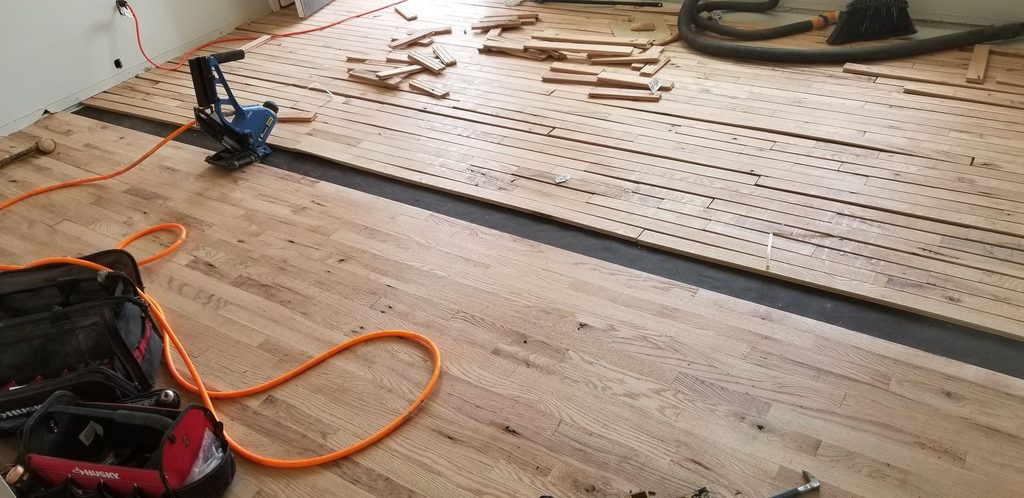
Current 2026 hardwood trends favor natural wood, light tones, warm brown colors, and matte or satin finishes, while demand for gray and red-toned finishes is declining. NWFA industry data also shows white oak remaining a leading species and increasing interest in natural and brown tones.
This means refinishing an existing oak floor can often bring it much closer to the look homeowners currently want without paying for complete replacement.
Current Hardwood Flooring Trends in Colorado
Colorado flooring trends in 2026 strongly favor floors that look natural rather than heavily processed.
Popular directions include:
- Natural oak
- White oak appearance
- Warm beige
- Honey
- Light blonde
- Caramel
- Medium brown
- Warm greige
- Matte finish
- Satin finish
Cool gray is declining, while warm natural colors are becoming much more popular nationally and locally.
For homeowners with existing hardwood, this trend actually makes refinishing particularly attractive.
Natural grain and existing character no longer need to be hidden.
Refinishing vs. Replacing in Denver
Denver has a large mix of older and newer housing.
In established Denver neighborhoods, it is common to find original oak flooring that may look badly worn but still has plenty of usable wood.
In that situation, replacing the entire floor can mean removing material that may still have decades of life.
A professional sand and refinish can often restore the existing hardwood while preserving the character of the house.
Another Colorado-specific factor is sunlight.
Denver’s altitude and strong sunlight can cause noticeable fading and color changes, especially near large south- and west-facing windows. Local flooring professionals also point to Colorado’s dry climate and winter humidity changes as important factors in how hardwood ages.
Fading alone does not mean the floor needs replacement.
In many cases it can be corrected during refinishing.
Highlands Ranch: Refinish or Replace?
Many Highlands Ranch homes have traditional oak floors installed during earlier construction periods.
We frequently see floors where the wood itself is still good but the appearance feels outdated.
Common issues include:
- Orange or amber color
- Glossy polyurethane
- Surface scratches
- Worn kitchen areas
- Older stain colors
This is exactly the type of floor where refinishing can make financial sense.
A natural, warm neutral, honey, or medium-brown refinish can modernize the entire first floor without removing otherwise good hardwood.
Castle Rock and Castle Pines
One of the strongest current trends around Castle Rock is wide-plank white oak with natural matte finishes. Local 2026 flooring trend reporting shows wide-plank white oak as a particularly strong choice in the area.
If your house already contains narrow red oak, refinishing will not turn it into wide-plank white oak.
However, you may still be able to capture part of the same aesthetic through:
- Lighter stain
- Natural finish
- Warm neutral color
- Matte or satin sheen
If the homeowner specifically wants wide-plank flooring, then replacement becomes a design upgrade rather than a repair necessity.
Parker
For Parker homes, we often see a practical choice between updating existing hardwood and installing newer wide-plank flooring.
If the existing floor is in good structural condition, refinishing often provides much better value.
Warm natural colors and medium browns also work well in the larger, open layouts common in many Parker homes.
Replacing may make more sense when homeowners are renovating several rooms and want one continuous floor where different materials were previously installed.
Centennial
Centennial has many homes with older red oak flooring.
The floor itself may be perfectly usable even if the color no longer matches an updated kitchen.
Instead of tearing it out, refinishing can often change:
yellow/orange oak → natural, neutral, honey, greige, or medium brown
That can make existing hardwood work with white cabinets, warm neutrals, black hardware, or more contemporary interiors.
Littleton
Littleton has both older character homes and newer suburban construction.
In older houses, original hardwood may be part of what gives the property its character.
If those boards are structurally sound, we generally prefer restoration over replacement.
Small damaged areas can often be repaired and blended into the existing floor before the entire surface is refinished.
Lone Tree
Homes in Lone Tree often have larger open floor plans.
Replacing a large continuous hardwood area can become expensive very quickly because the material cost multiplies across hundreds or thousands of square feet.
If the floor is structurally sound, refinishing can provide a dramatic appearance change while preserving a significant amount of the remodeling budget for other projects.
What About a Screen and Recoat?
Before choosing either refinishing or replacement, there is actually a third possibility.
A screen and recoat, also called buff and coat, may work when:
- The existing finish is dull
- Scratches are light
- The stain color is still acceptable
- Bare wood is not exposed
- The finish is compatible with recoating
This process does not sand the floor down to bare wood.
Instead, the existing finish is lightly abraded and another protective coat is applied.
Around Denver, screen-and-recoat pricing can be approximately $1–$3 per square foot, making it considerably cheaper than full refinishing.
The important part is timing.
If you wait until the finish is completely worn through, a maintenance coat may no longer be enough.
Should You Refinish Before Selling Your House?
Often, yes.
Worn hardwood can make buyers assume the house requires major renovation.
Freshly refinished hardwood can change the appearance of:
- Living rooms
- Kitchens
- Hallways
- Entryways
- Open-concept spaces
without replacing the flooring.
Refinishing also avoids choosing expensive new hardwood that a future buyer may not even prefer.
For resale preparation, a neutral natural or medium tone is generally safer than an extremely dark or highly customized stain.
Is New Hardwood Better Than Refinished Hardwood?
Not necessarily.
New does not automatically mean better.
A quality existing solid hardwood floor can be an excellent material.
Older floors may contain thick solid oak boards that are perfectly capable of serving the home for many more years.
If the floor is stable and has enough thickness remaining, refinishing can preserve that material while producing a completely refreshed appearance.
Replacement should solve a real problem or achieve a design goal that refinishing cannot.
Our Rule: Don’t Replace Good Hardwood Just Because It Looks Old
One of the most common mistakes homeowners make is assuming:
old appearance = bad flooring.
Those are not the same thing.
A floor can have:
- Heavy scratches
- Faded finish
- Old color
- Dull areas
- Surface stains
and still be an excellent candidate for restoration.
Before recommending replacement, we look at:
- Wood thickness
- Floor stability
- Moisture damage
- Board condition
- Previous sanding
- Pet damage
- Subfloor condition
- Desired final appearance
- Repairable vs. non-repairable areas
Only then does it make sense to compare the true cost of refinishing and replacement.
Final Answer: Is It Cheaper to Refinish Wood Floors or Replace Them?
Yes — if the existing hardwood is structurally sound, refinishing is usually substantially cheaper than replacement.
In Denver Metro, full refinishing commonly falls around $3–$8 per square foot, while installing new hardwood can reach roughly $8–$25 or more per square foot, depending on material and project complexity.
Refinish when the main problems are:
- Scratches
- Worn finish
- Outdated color
- Fading
- Minor stains
- Normal wear
Consider replacement when you have:
- Severe water damage
- Rot
- Extensive pet contamination
- Structural problems
- Insufficient remaining wood
- Or you specifically want a different species, board width, or flooring design
For many Colorado homes, the best-value solution is not replacing the hardwood.
It is keeping the quality wood already in the house and making it look new again.
Hardwood Floor Refinishing in Denver Metro
Dream Flooring LLC provides hardwood floor sanding, staining, refinishing, repairs, buff and coat, and installation throughout Denver Metro, including Denver, Highlands Ranch, Littleton, Centennial, Lone Tree, Parker, Castle Rock, and surrounding communities.
If you are deciding whether to refinish or replace your hardwood, send us photos and approximate square footage. We can help determine whether the existing floor is worth saving and which option makes the most financial sense.
Do your hardwood floors really need replacement — or could refinishing save most of the existing floor and thousands of dollars? Contact Dream Flooring LLC for an evaluation.